
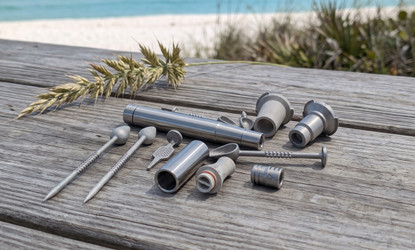
Not All Stainless Steel Is the Same: How We Choose the Right Metal
Posted by Delta3DStudios on Oct 2nd 2026
316L, 304, 17-4PH, 420 stainless... what does any of that actually mean?
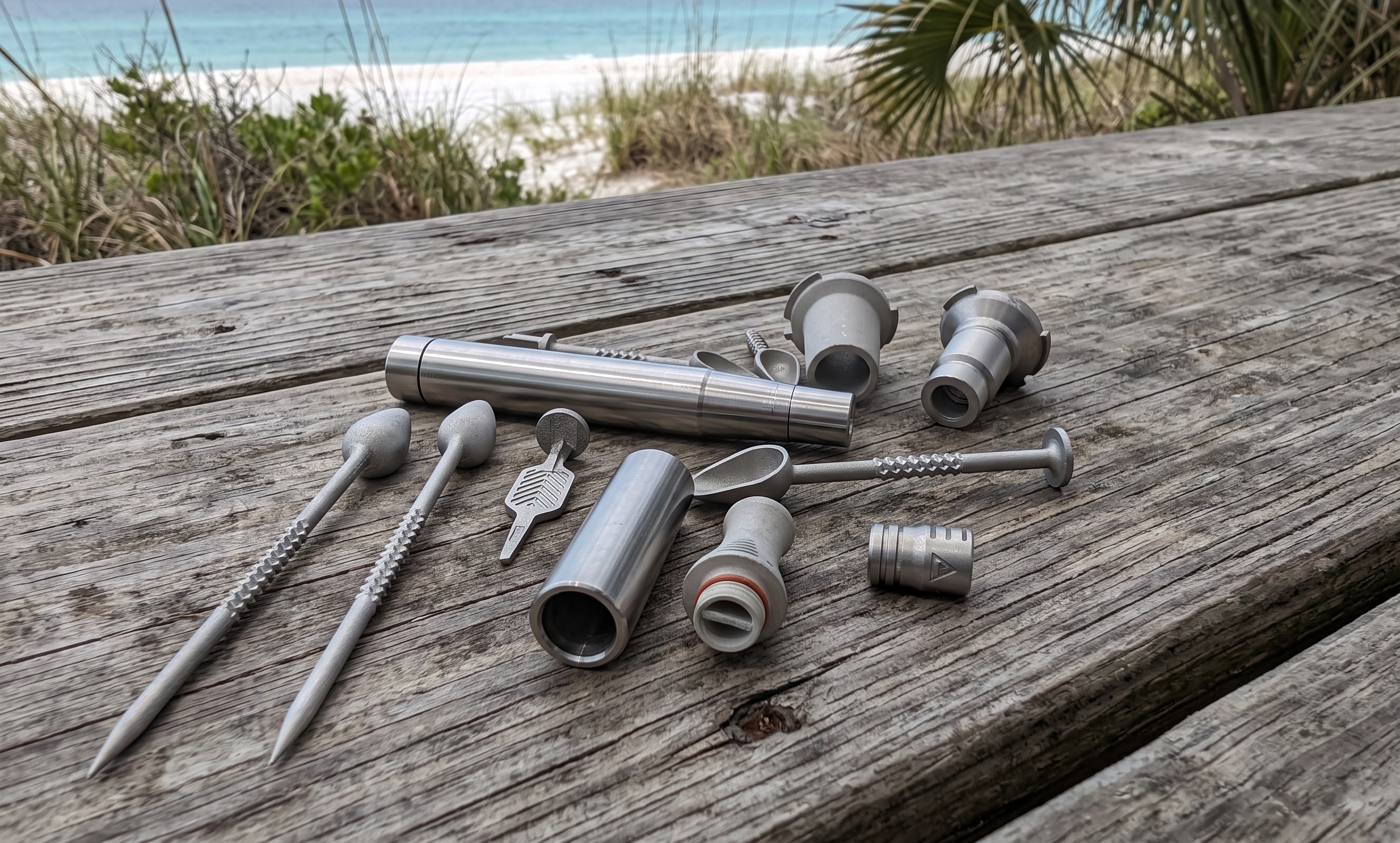
If you’ve browsed through our metal tools and vaporizer accessories, you may have noticed that we don’t use the same type of stainless steel for everything. Some parts are made from 316L stainless steel. Many of our newer scoop tools are transitioning to 17-4 stainless steel. MMS Metalworks machines its parts from 304 stainless.
So why all the different materials?
The short answer is simple: there is no single “best” stainless steel for every application.
Different alloys have different strengths, weaknesses, and characteristics. We pick the material based on what the part actually needs to do.
Stainless steel is a family, not one material
When somebody says something is made from “stainless steel,” that only tells you part of the story.
There are many different stainless alloys, each formulated for different applications. Some prioritize corrosion resistance. Some prioritize hardness and strength. Some are magnetic. Some are essentially non-magnetic. Some machine beautifully, while others are particularly well suited for industrial metal additive manufacturing.
For the parts we currently produce using laser-fused metal additive manufacturing, the two stainless alloys we use most are 316L and 17-4 stainless steel, commonly referred to as 17-4PH.
These aren’t random alloys we picked out of a catalog. 316L and 17-4 are two of the most mature, widely supported stainless steels in industrial metal 3D printing. That availability helps keep small-batch production practical without jumping into much more exotic metals.
And “practical” matters. Metal 3D printing has existed for a long time, but that doesn’t mean it has always made financial sense for products like ours.
We’ve been experimenting with metal 3D printing since 2014
We first started experimenting with metal 3D printing in 2014.
At the time, one of the more accessible options for small companies like ours was a 420-alloy stainless steel material blended with bronze. It was very different from the stainless steel processes we use today, but it solved an important problem for us:
We could finally make small vaporizer tools that wouldn’t melt when used around a hot oven.
That was the real appeal.
Many of the vaporizers we make accessories for operate at temperatures over 400°F. Plastic can be perfect for cases, organizers, loading tools, and plenty of other accessories, but it is not always the material you want when a poking, scraping, or stirring tool may come into direct contact with a hot vaporizer oven.
Metal gave us another option.
Those early printed stainless tools could handle the heat, which opened the door to products like scoop tools, pokers, stir tools, and other accessories designed to work directly around hot vaporizers.
There was still an important limitation, though. Because that early material was a stainless-and-bronze composite rather than the solid stainless alloys we use today, we were never comfortable putting it directly into the vapor path.
So we didn’t.
That has always been one of our basic rules here: if we wouldn’t personally use something for health or safety reasons, we're not going to sell it to our customers for that purpose.
We sold plenty of those early metal tools over the years, but we deliberately stayed away from designing mouthpieces, adapters, or other parts where vapor would flow directly across that material.
Higher-end metal additive manufacturing existed back then too. The problem was price. Manufacturing costs could easily be twenty times what they are today, which would have made the finished products completely unrealistic for most of our customers.
Thankfully, that has changed.
Industrial metal printing has become affordable enough that we can now produce solid stainless parts in small batches without turning every scoop tool into a luxury purchase.
Why we use 316L for the vapor path
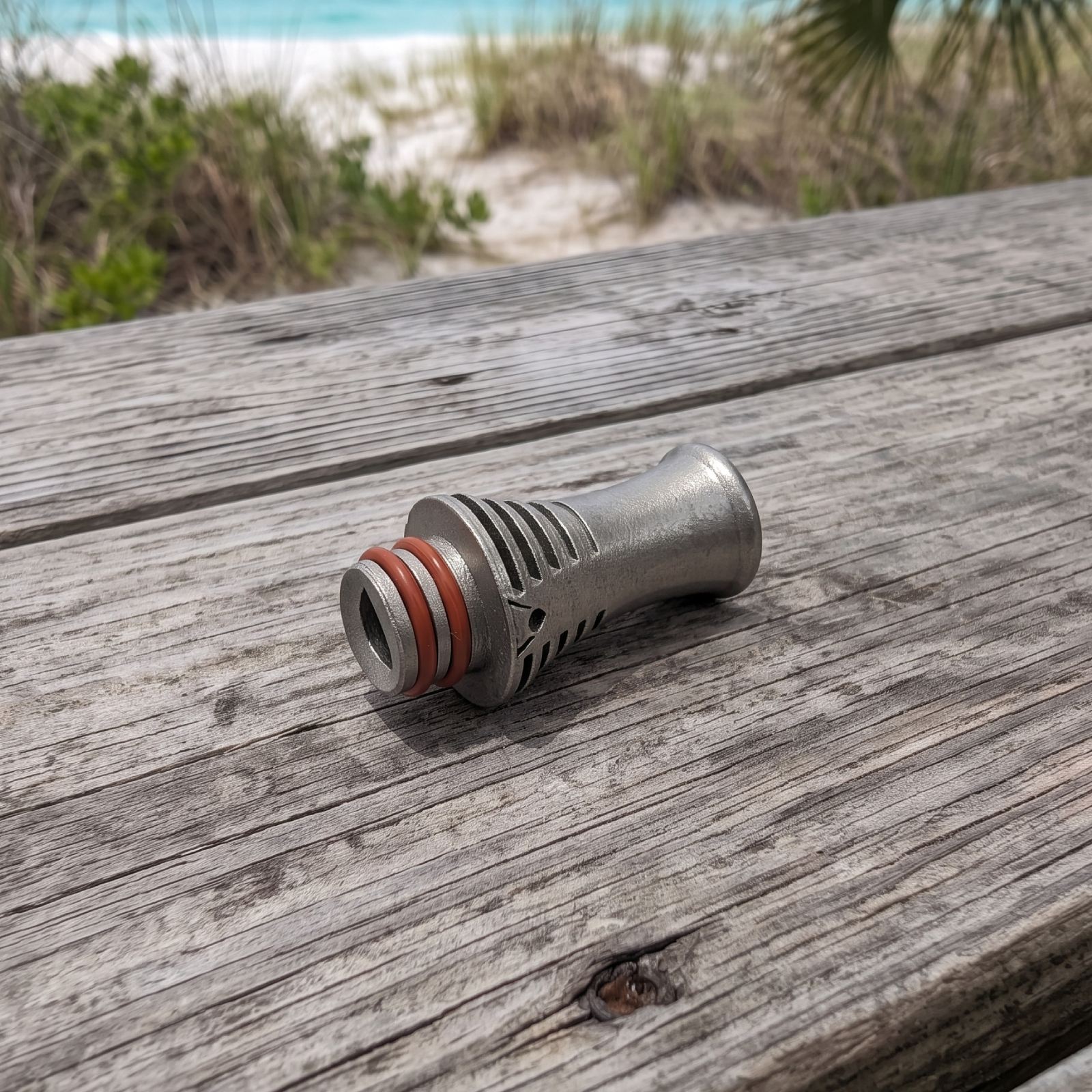
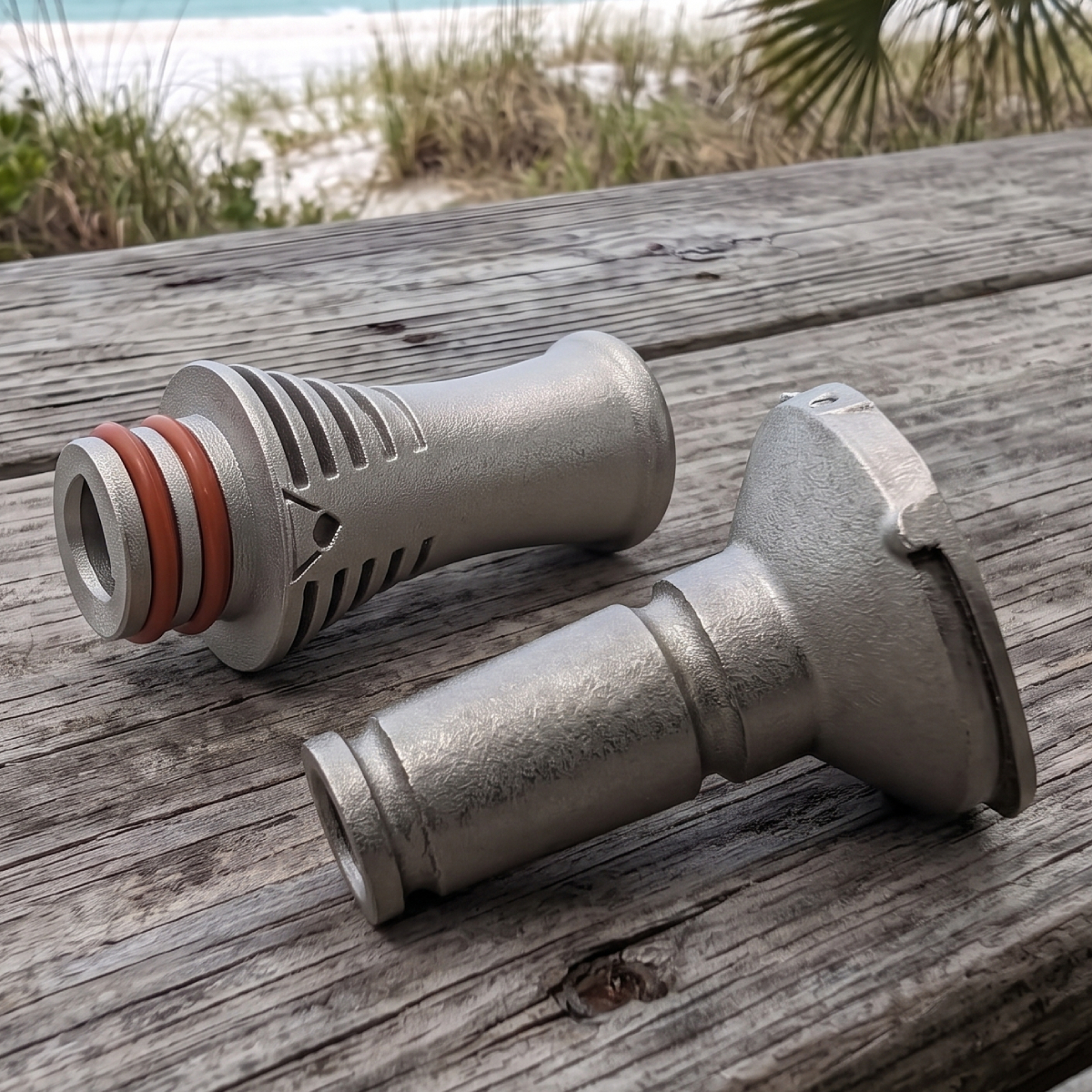
For anything that becomes part of the vapor path, 316L stainless steel is our preferred material.
The “L” stands for low carbon. 316L is widely used in demanding environments where corrosion resistance matters, including food-processing, pharmaceutical, chemical, and medical applications.
For us, the important part is straightforward: it offers the combination of corrosion resistance, durability, and material confidence we want for components that vapor passes directly through.
That includes parts such as our VENTY Waterpipe Adapters, FinTwist mouthpieces, and other vapor-path designs currently in development.
Could other stainless steels also work in a vapor path? Sure. For example, MMS Metalworks machines its products from 304 stainless steel, including vapor-path components. 304 is an extremely common and well-established stainless alloy.
For our laser-fused metal parts, 316L is the material we’ve chosen for direct vapor contact.
There isn’t necessarily one universally correct answer. It comes back to choosing the right material for the manufacturing process and the application.
So why not just use 316L for everything?
For a while, we did.
When we began expanding our newer metal-printed product line, many of our scoop tools were produced in 316L simply because we already trusted the material and knew it worked well.
Then customers started asking an important question:
“Why isn’t it magnetic?”
316L is generally considered non-magnetic, and apparently more people use magnets to hold their vaporizer tools than we realized.
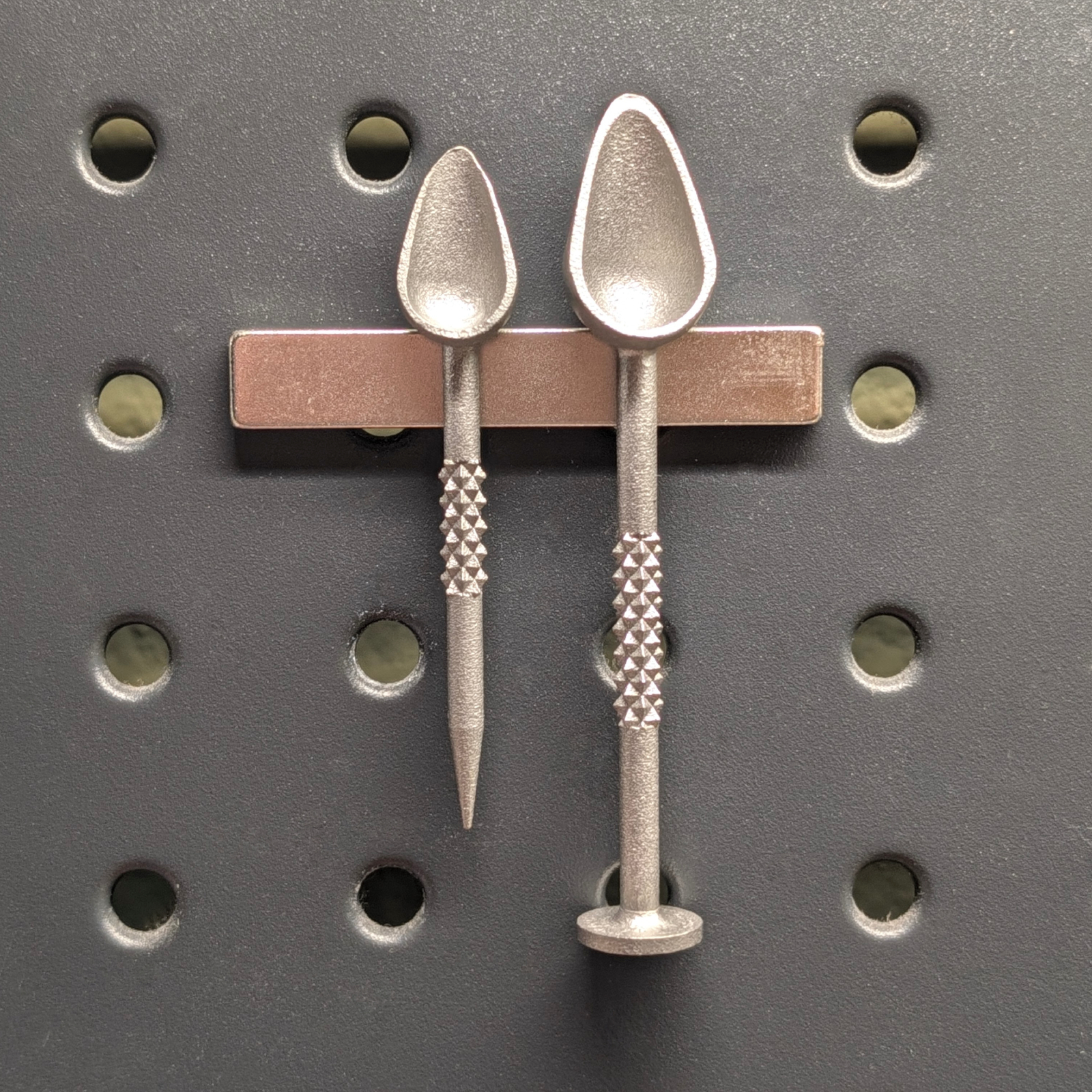
Some customers like sticking their scoop or poker to a magnetic tray or holder when they aren’t using it. Others pointed out that a magnetic tool is much easier to retrieve if it gets knocked under a desk, table, or somewhere else inconvenient.
That may sound like a small thing, but for some of our older customers or people with limited mobility, being able to retrieve a dropped tool with a magnet can be genuinely useful.
So we listened. Many of our hand tools are now transitioning to 17-4 stainless steel, commonly referred to as 17-4PH.
The big advantage for our customers is obvious:
17-4 is magnetic.
That alone solved the most common complaint we were hearing about the newer stainless tools.
But there’s another benefit too. 17-4 is a harder, stronger stainless alloy, which is a nice fit for products with small poker tips, scraping edges, tamping surfaces, and other features that benefit from maintaining their shape over time.
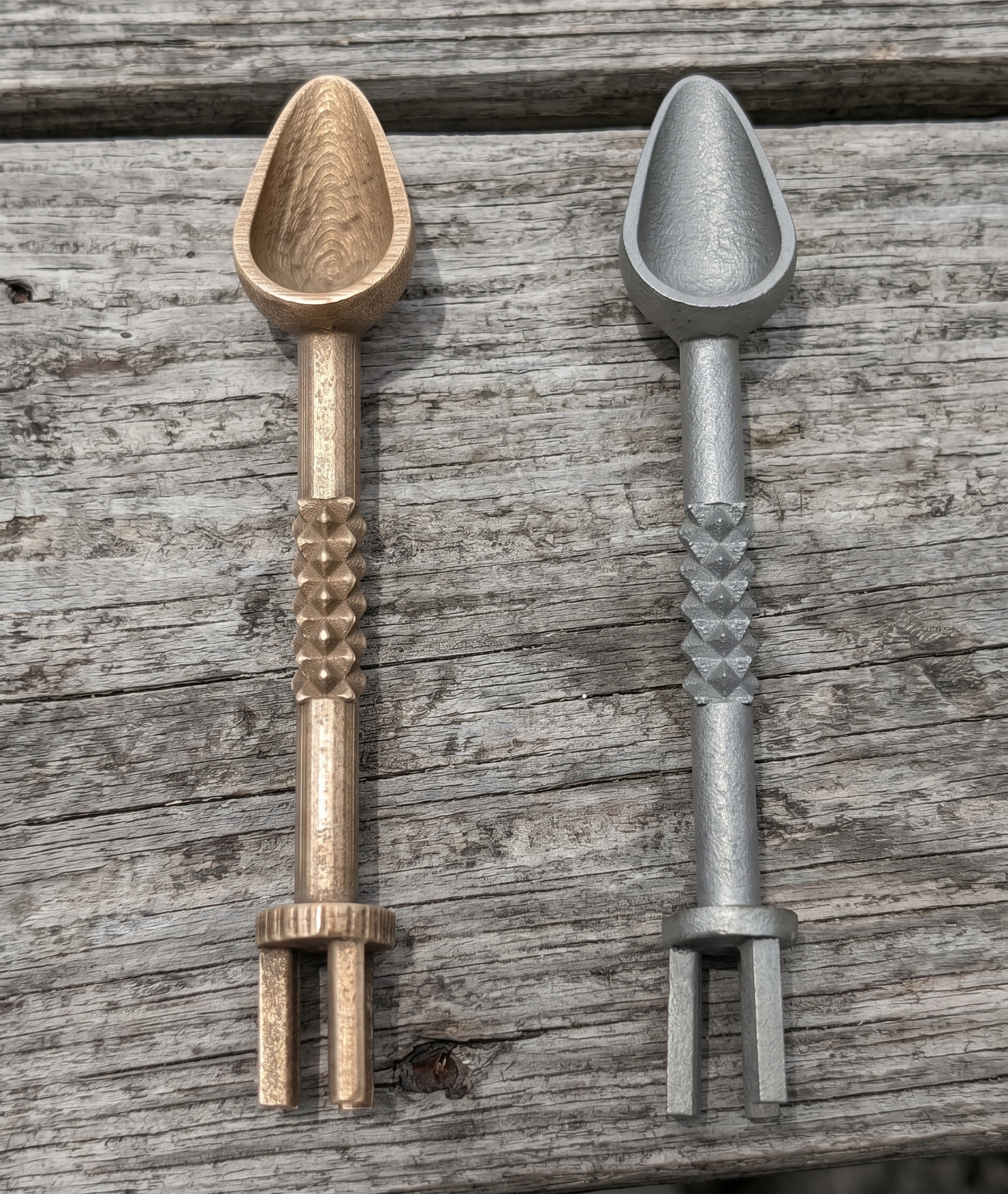
That makes it particularly well suited for products like our Scoop-N-Poke, Scoop-N-Stir, and other tool designs.
Some of these tools are also used directly around hot vaporizer ovens and bowls. That is exactly why we started making these types of products in metal more than a decade ago in the first place. When you’re poking, scraping, stirring, or tamping around a hot oven, having a tool that can comfortably handle the heat matters.
We're still transitioning through existing inventory, so if the exact alloy matters to you, check the specifications on the individual product page. Some products may still be available in 316L while newer batches transition to 17-4.
Metal 3D printing lets us make things that are difficult to manufacture conventionally
Heat resistance may have been what originally pulled us into metal 3D printing, but modern metal additive manufacturing gives us another big advantage:
design freedom.
We can manufacture geometries that would be difficult, expensive, or sometimes impractical to produce using conventional machining.
Take our Scoop-N-Poke as an example. The scoop geometry, handle, and fine poker tip are all produced as one solid metal part, a geometry that would be far more difficult to produce using traditional CNC machining.
The same idea becomes even more important with parts like our FinTwist mouthpieces, where complex internal geometry can be built directly into the component.
These designs are produced on industrial-grade machines using laser-fused metal additive manufacturing, building the finished metal geometry layer by layer.
And now we polish them too
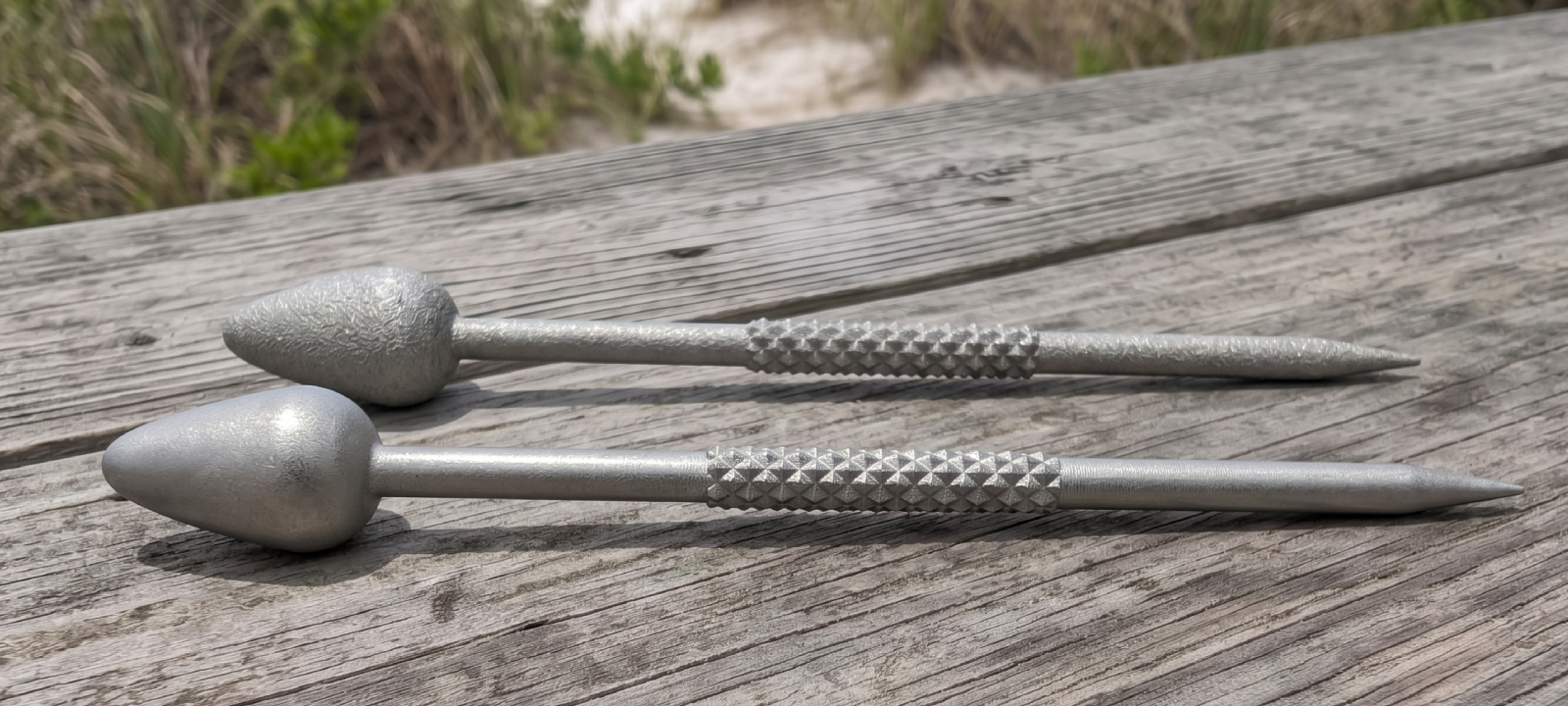
One change we’ve recently made is adding vibration polishing as a standard finishing step for all of our metal 3D printed parts.
Metal additive manufacturing naturally leaves behind a slightly textured surface. Polishing gives the finished pieces a smoother, more refined appearance and feel, which helps prevent herb from sticking to the surface as easily.
Moving forward, both our 316L and 17-4 printed parts are vibration polished after production.
It adds another manufacturing step, but the difference is noticeable, especially when you compare an older unpolished part side-by-side with the current finish.
What about 304 stainless steel?
You’ll also see 304 stainless steel on the site, particularly on products made by our friends at MMS Metalworks.
304 is one of the most common stainless steels in the world and is an excellent material for machined accessories.
The important distinction is manufacturing method.
MMS machines its parts directly from stainless stock. We’re using industrial metal additive manufacturing for our printed designs.
Different manufacturing processes have different material options, costs, and strengths. 304 makes sense for what MMS is machining. 316L and 17-4 make sense for what we're laser printing.
Again, there isn’t one magical grade of stainless that wins every category.
Cleaning and caring for stainless accessories
Thankfully, stainless parts are pretty easy to maintain.
For basic cleaning, water works fine for ordinary dirt and debris. For resin or reclaim, we normally recommend 90% or higher isopropyl alcohol, which works considerably faster than weaker alcohol solutions.
For a simple scoop, poker, or tamping tool, soaking or wiping with isopropyl alcohol is usually all you need.
For vapor-path components with complex internal cavities, such as some of our FinTwist designs, an ultrasonic cleaner can make a huge difference.
For a deeper clean, parts can be placed in a small covered container of 90%+ isopropyl alcohol and cleaned indirectly in an ultrasonic water bath, following the ultrasonic cleaner manufacturer’s guidance for flammable solvents. Never fill a standard ultrasonic tank directly with IPA.
The ultrasonic energy transfers through the water bath and into the smaller container, helping agitate reclaim out of internal passages that can otherwise be difficult to reach.
For 17-4 tools, we also recommend rinsing and drying them promptly after cleaning rather than leaving them wet for extended periods.
And for either alloy, avoid bleach or chlorine-based cleaners.
Stainless steel isn’t the end of the road. For special orders, many of our tool designs can be produced in silver, gold, or platinum using traditional jewelry casting techniques from a 3D-printed wax master.
So if stainless simply isn’t excessive enough for your needs, we can probably fix that problem.
These are special-order pieces, with pricing based on the design, finished weight, and current precious-metal pricing.
Custom Order Request
The right material for the right job
So if you notice different stainless alloys appearing across the Delta 3D Studios catalog, it isn't random.
For our products, the rule is pretty simple:
If vapor passes through it, we prefer 316L.
If it is a hand tool where magnetism and hardness are useful, 17-4 may actually be the better choice.
And when you're looking at products from other manufacturers, such as MMS Metalworks, you may see 304 stainless because their manufacturing process and engineering requirements are different from ours.
The goal isn’t to chase the fanciest-sounding alloy.
The goal is to use the material that makes the most sense for the job.
And as metal additive manufacturing keeps getting better and more affordable, there are quite a few designs we've wanted to make for years that are finally becoming practical.
More on those soon.